Lake City Triathlon: how it was built, build by build
Nov 15, 2026 · A 70-second time-lapse of a party game growing from an empty repo to eight events in under 44 hours, made from the game's own git history, with what it took in issues, merges, build hours and tokens.
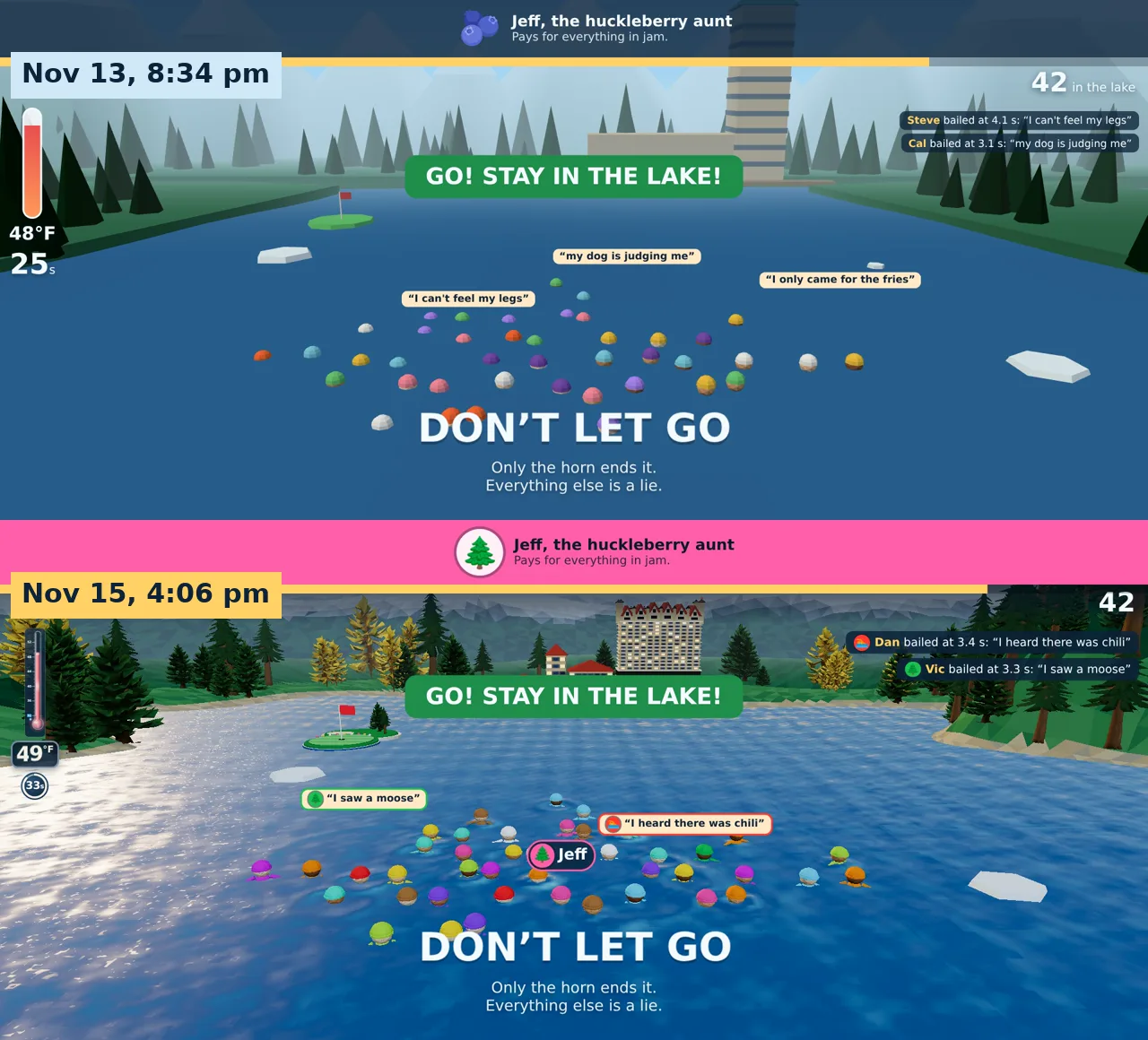
Lake City Triathlon went from an empty repo to eight events in under 44 hours. We wanted to see that, so we went back through the git history and took a picture of the game at 22 of its commits.
Nothing in it is mocked up. A script checks out each commit, serves it, opens "Try it alone" and plays the show ahead to the same moments: the lake during Plunge, the bear, the tee, the podium. Each caption has the commit's date and time (Pacific) and the issue that built it. There's a vertical cut too, shot at phone size.
This post is the build history. For what the game is and why it's built the way it is, read the whole story.
How the work was organised
Every change was an issue. Nobody opened an editor and started typing.
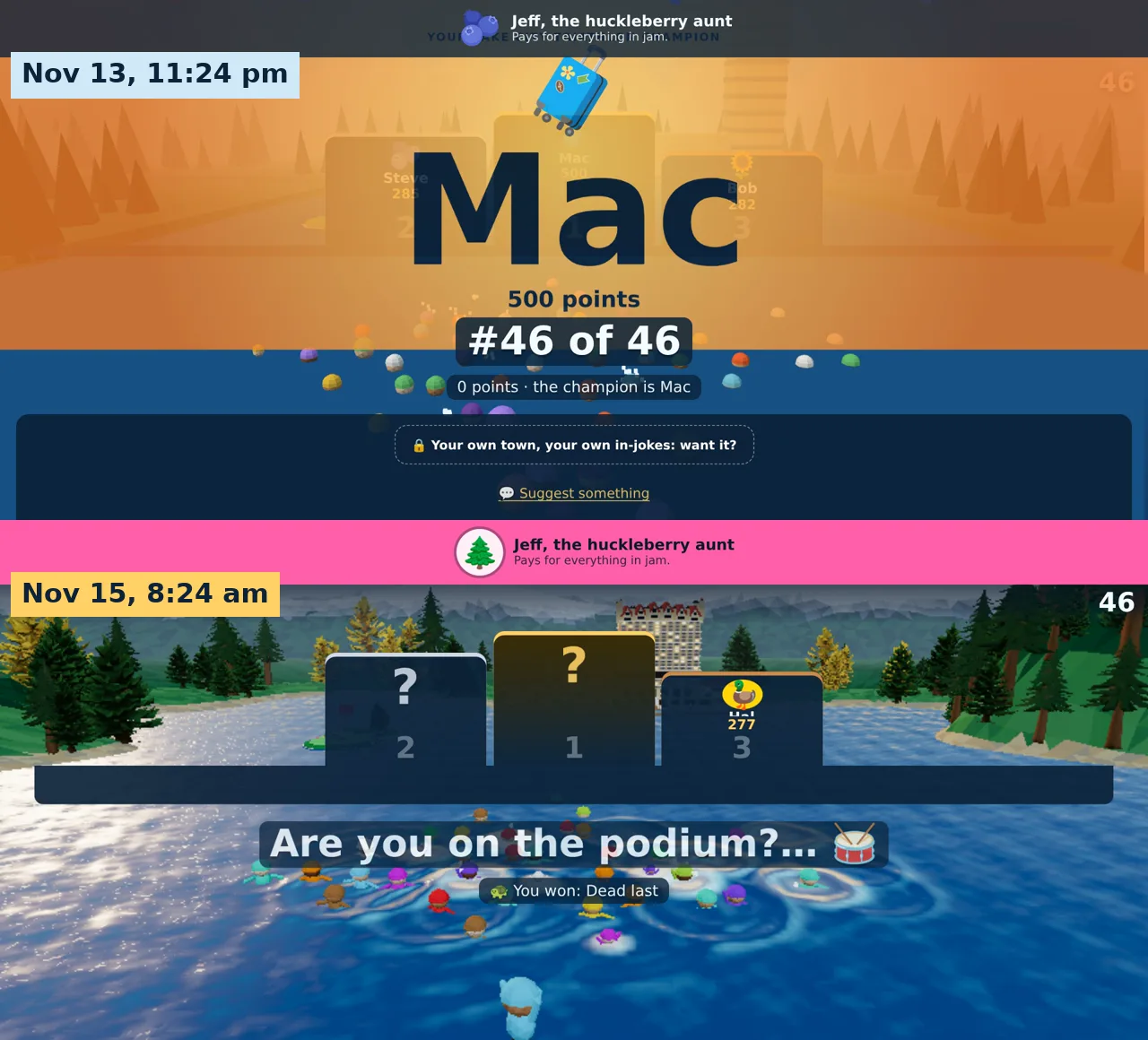
The idea came out of a brainstorm and was groomed as one item in our studio's shared queue. The first four builds came from that item on Friday night: Plunge at 8:34 pm, Pick at 9:41, Putt at 10:49 and the podium at 11:24. By midnight it was published.
Just after midnight the game graduated to a repo and a queue of its own. From then on the loop was the same every time. Jeff filed an issue, or a batch of them. Our build pipeline, which we call cowboy, handed each one to an AI agent. The agent read the issue, built it, ran the tests, and pushed a branch. The merge request merged by itself, and the merge published the page. Jeff played the change on the live page and filed what he saw.
There was no review stage, so the tests were the only gate. That mattered later.
The turning points
Saturday, 12:42 am: the rules. The first build worked, but someone who had never seen it couldn't have played it. Jeff wrote down what every event owes a stranger: an intro card before it starts, one verb and one instruction on the phone, and you always know which one is you. The next builds were those rules, one at a time. The intro cards landed at 2:14 am, and picking your colour and emoji at 2:42.
Saturday, 4 to 7 am: the look. Three builds in three hours changed what the screen was made of. The bear became a 3D grizzly, the flat pond became water with a low sun on it, and the cones on the tee became little people with clubs, beside a real pontoon and a jet ski.
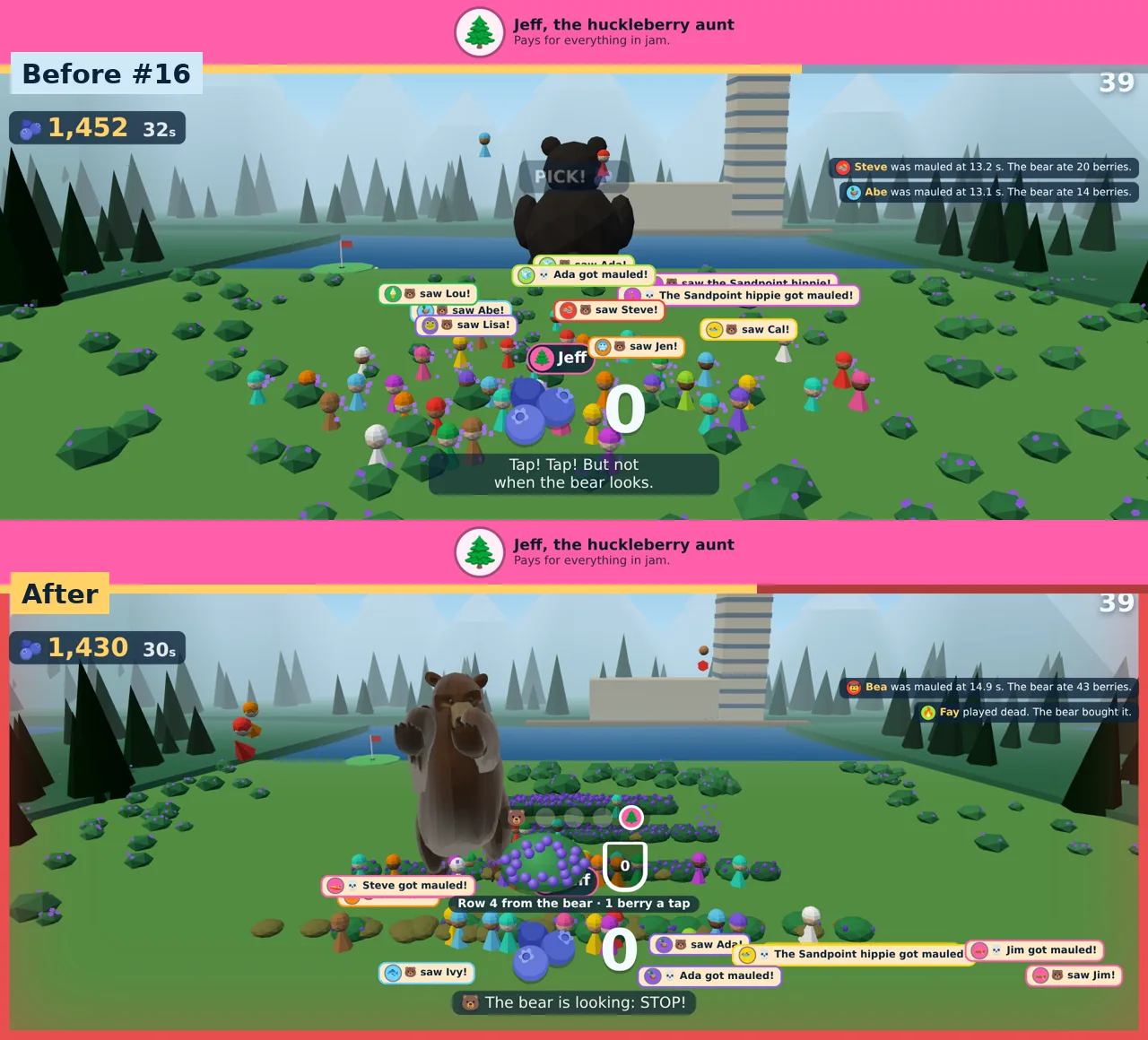
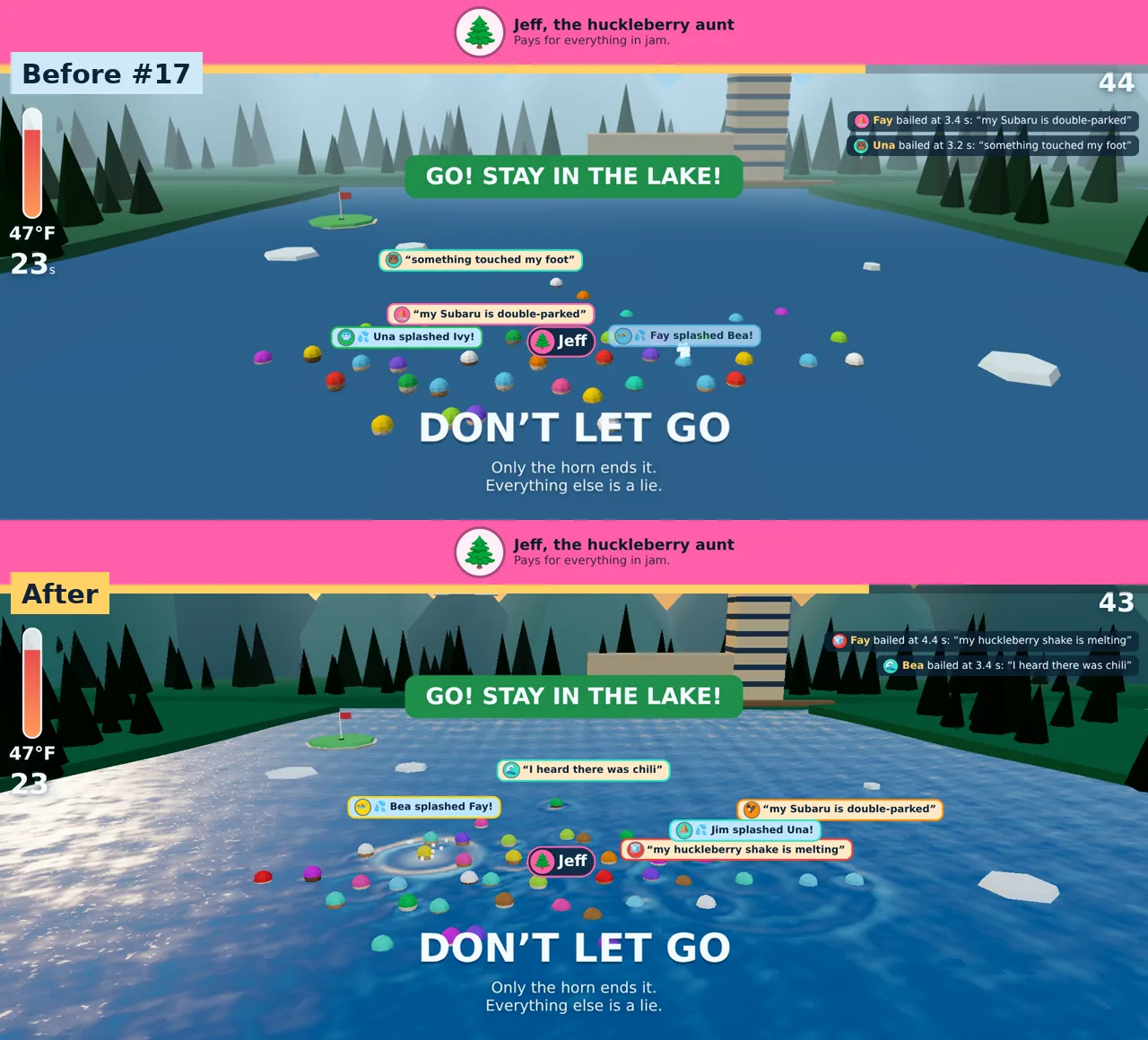
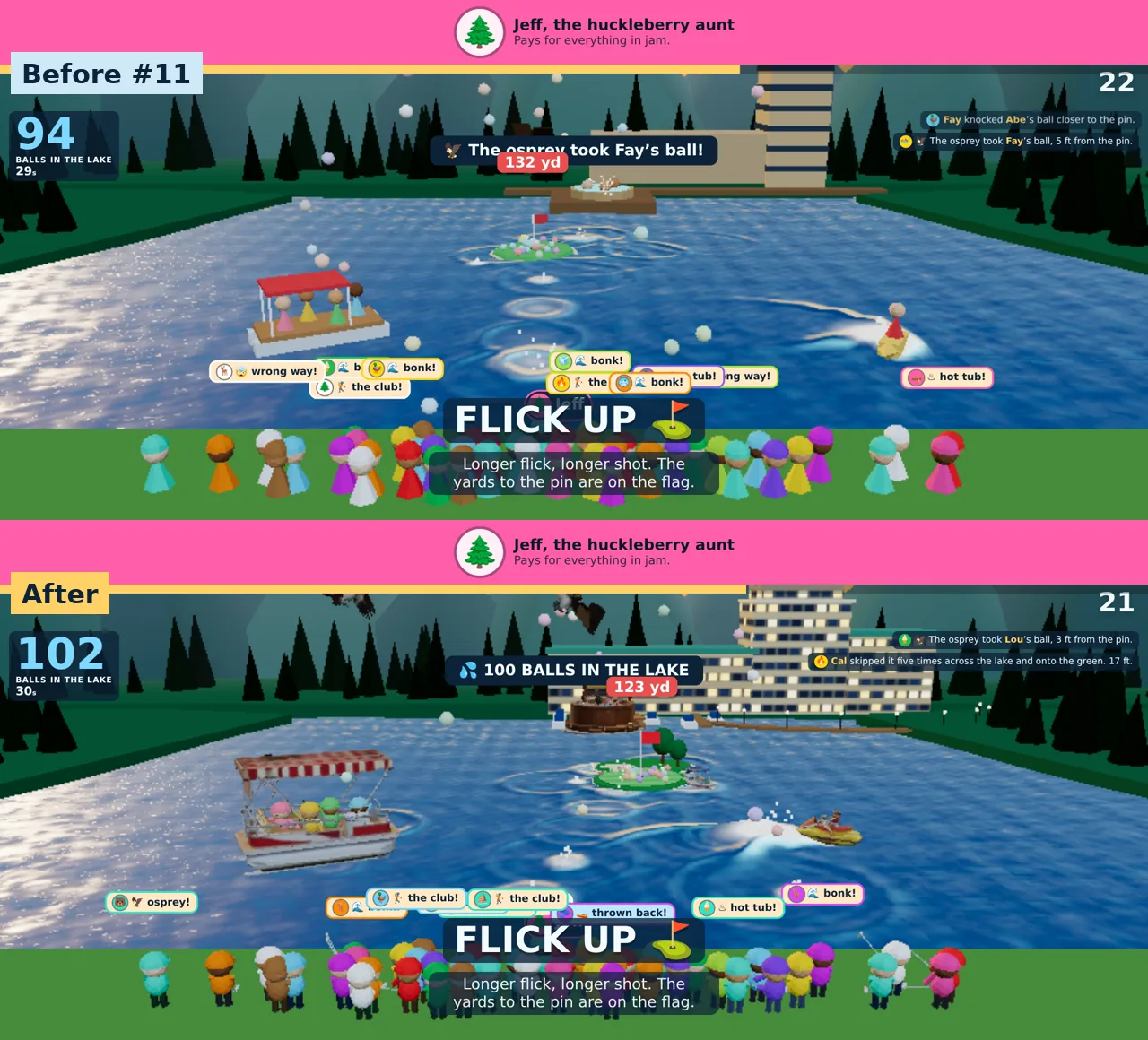
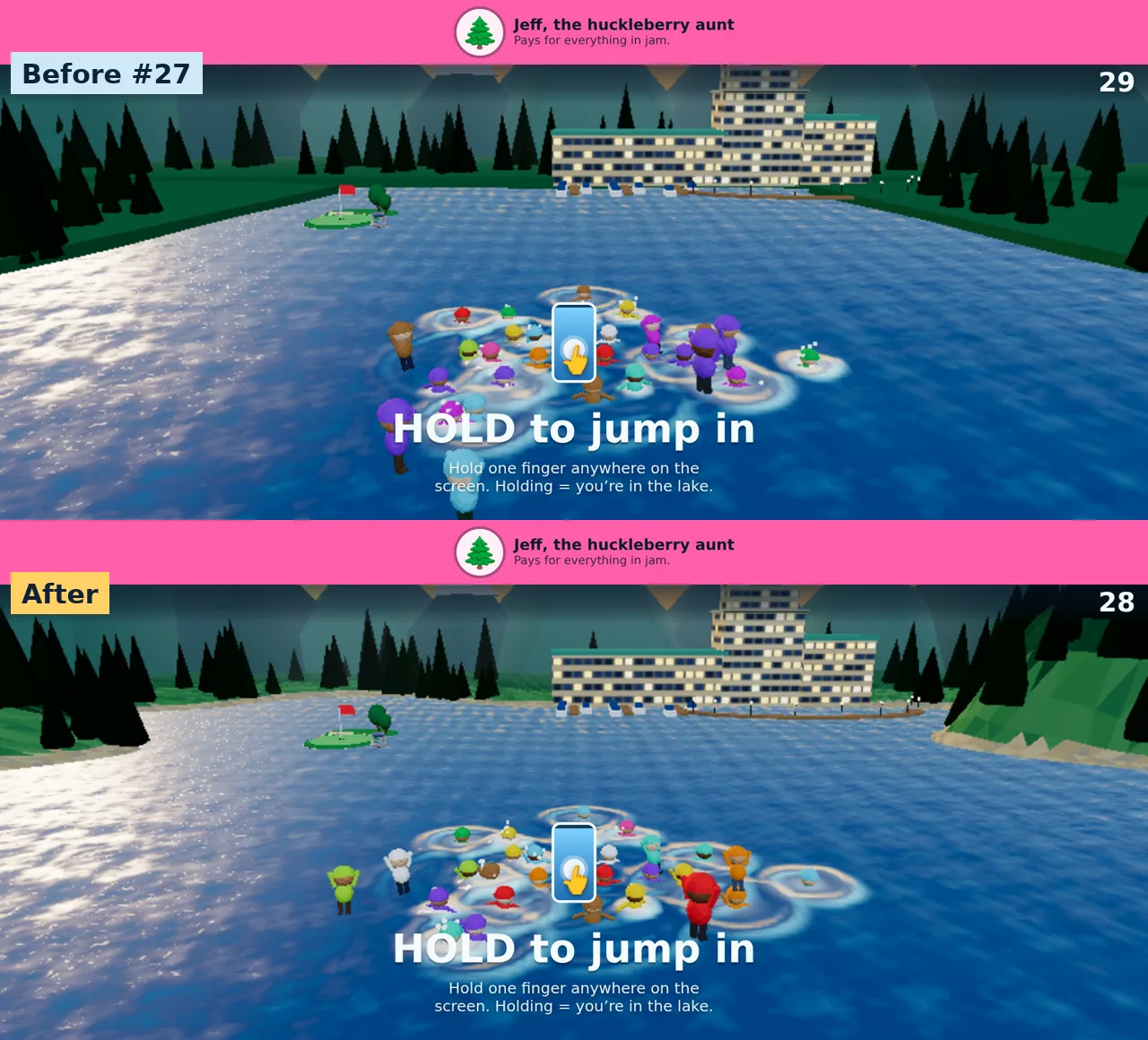
Saturday evening: the place. The lake had straight edges and a hotel made of blocks. At 4:53 pm it got a shore with coves and a headland. At 5:40 the hotel became the Coeur d'Alene Resort, with its red gables and boat slips. The trees took until 5:31 on Sunday morning: firs, golden tamaracks and ridgelines with snow.
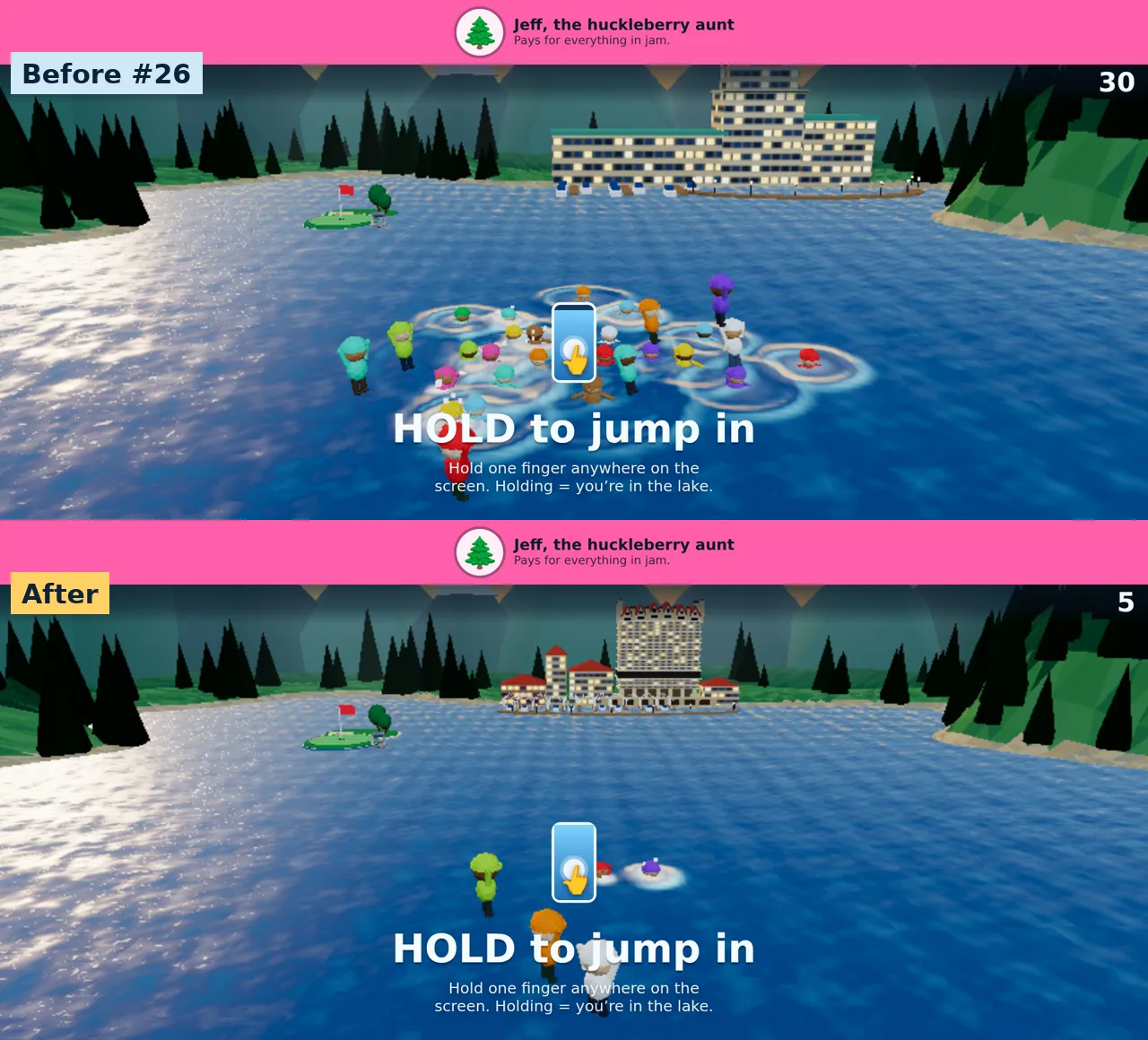
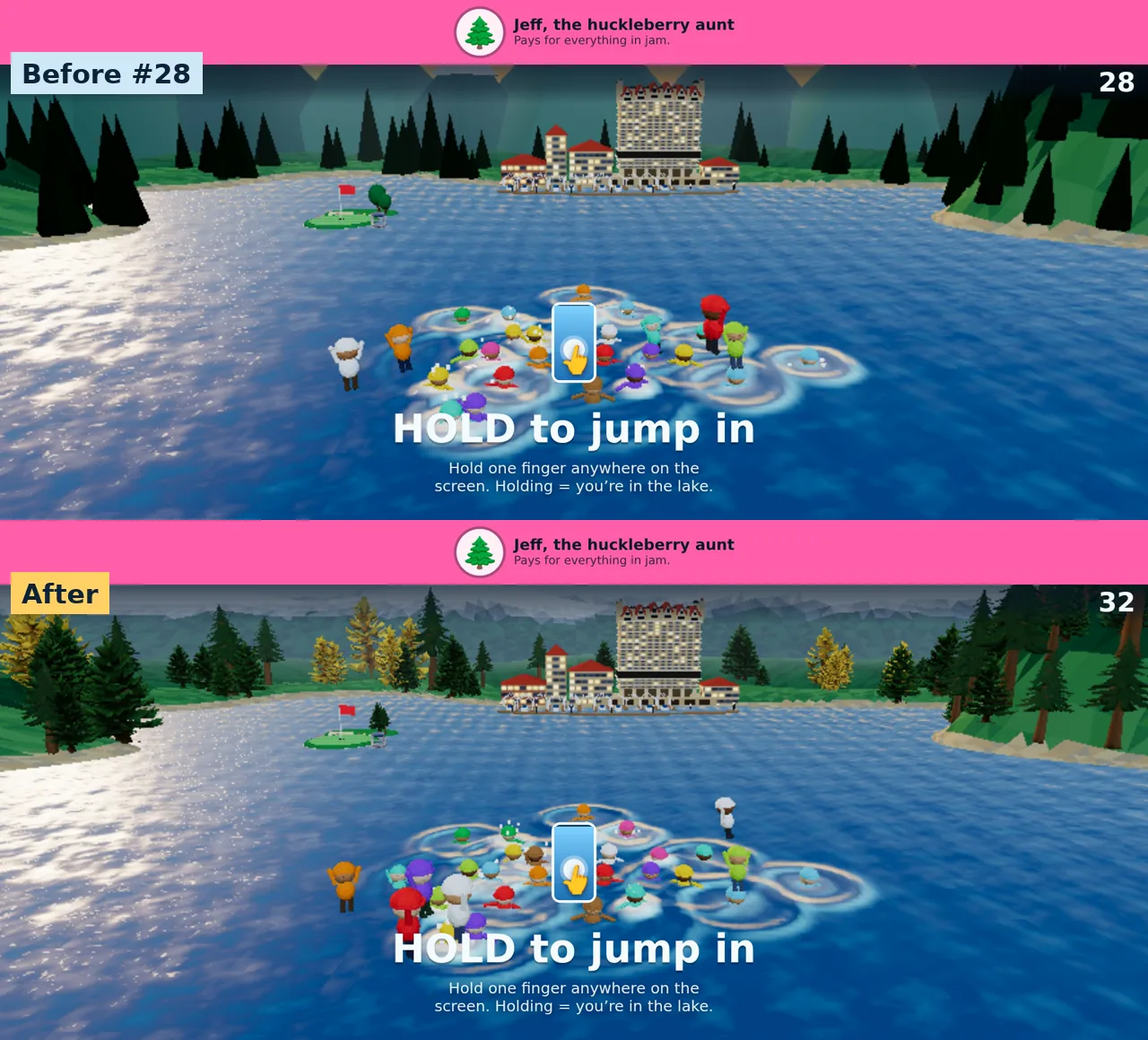
Sunday, 3:22 am: the test rule. By Saturday night the full browser check took about nine minutes and failed at random, on a pipeline where the tests are the only gate. One issue fixed that. It was the longest build on the meter, at 3.6 hours. The check now takes about two minutes and waits on the game's state, not on a stopwatch.
Sunday, 7:41 to 8:56 am: eight events. Saturday night's last build had turned each event into a module the show runs from a lineup, with no change you could see. Sunday morning that paid off. At 7:41 the slot machine arrived: Plunge opens, and two more events are drawn each show. The podium became a ceremony at 8:24. Then Pike, Perch, Pop, Pass and Paddle merged at 8:41, 8:45, 8:48, 8:52 and 8:56. They were built side by side, one branch each, against the same module shape.
Sunday, the rest. The lobby got a host who warms up the room at 10:50 am. At 1:21 pm the room learned to sleep: an empty room on the server now costs nothing while a projector waits for its first phone.
What it took
The counts are from the repo and its issue tracker, on Sunday at 5 pm.
- 43 hours and 44 minutes from the first commit (Friday, 8:22 pm) to the last merge before this post (Sunday, 4:06 pm).
- 52 issues filed. 49 are closed, this post is the fiftieth, and two are still open.
- 77 merge requests merged, and 171 commits on the main branch.
Cowboy keeps a meter on every build: how long the agent ran and how many tokens it used.
- 39 build-hours across 41 issues in the game's own queue, which opened just after midnight on Saturday.
- 3.1 million output tokens. That's everything the agents wrote: code, commands, and notes back to Jeff.
- 636 million cache-read tokens. An agent re-reads its whole working context at every step, and a build is hundreds of steps. Most of that context is served from a cache, so this is the number that gets big.
- Friday night's four builds, before the game had its own queue, add 2.5 hours, 0.47 million output tokens and 40 million cache reads.
- Writing the issues took tokens too. The planning chats where Jeff and an agent wrote them up used 0.64 million output tokens and 128 million cache reads.
Those numbers are a floor. Eight issues were built by agents working outside the pipeline on Sunday morning: the five new events and three batches of fixes. Cowboy has no meter on them.
Then there's what code couldn't make. Our asset catalogue has 120 generations for this game, and 109 of them are in it:
- 95 from ElevenLabs: 71 sound effects and 24 batches of announcer lines and first names. 18,453 characters of text in all.
- 22 from fal.ai: 12 images and 10 models made from them, such as the grizzly, the osprey and the pontoon. They cost $0.23 together.
- 3 tries on Meshy for 6 credits. None made it in.
What the numbers don't show
Jeff's time isn't on a meter. Every issue started with him. He played each change on the live page and made the calls. The agents never decided what the game should be. They were told, 52 times.
It also hasn't had its night yet. As the story says, it has only been played by bots and test phones so far. If you host one, tell us how it went.
How Lake City Triathlon was made: the launch note, Nov 14, 2026